


Elabuga is a picturesque provincial town just north of the Kama river which was home to some prominent Russian literary figures and artists, with several noteworthy Russian orthodox churches and museums.
It was Saturday and Maigul, one of our cost engineers from Kazakhstan, had organized a guided tour with a local driver and an english interpretor. I had not known about it since I had spent the morning at the police station, and I just happened to run into Ric and Neal who informed me of the trip. I asked if there were was any more room on the bus. It so happens it was the last seat in the van. In addition to Neal and Rick (from Texas) was Pandit from India, Tippawhan from Thailand, another Thai girl but out of the Houston office, Bobby from Mississippi, an engineer from Denmark along with his Chinese wife, Katherine from Singapore and another fellow I believe from the U.S. Some of the folks I met for the first time, so I'm not good with names. The point being we had seven different nationalities among the 13 of us, counting our Russian driver and tour guide.
We drove first to Naberezhnye Chelny, a port city on the Kama river about 30 minutes from Nizhnekamsk, where we picked up our tour guide. We then crossed the Kama river, which happens to be the site of a large dam and hydro-electric plant. The river had locks there to get the ships around the dam. The river seemed to be every bit as wide as the Mississippi. We drove through forests and fields not unlike the rolling hills of perhaps central Ohio. when arriving in town, we could see the old Russian architecture on the buildings and houses. The town had recently celebrated the 1,000th anniversary of its founding, first by Bulgarians from the south, then by Russians from the west. At one time the town was home to a very prosperous merchant class, but those people all left after the communist revolution of 1917. A famous poet, I believe her name was Alileava, lived there briefly while she was evacuated from Moscow during World War II as the Nazis were advancing on the city. The city has several memorials to "The Great Patriotic War", as Russians term our World War II, and a number of significant officers from Elabuga had served in the war. The story of the poet Alileava seems to befir the struggles in Russia during the communist rule, as she hung herself in the public square, despondent over the deterioration of the Soviet Union, herself and her husband victims of repression resulting from their overseas travels. Western contact in those days could prove very dis-advantageous. In 1943, two years after her death, her only son was killed in the war.
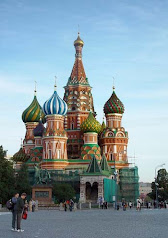
The Russian Orthodox churches were quite impressive. The bell towers and massive bells, manufactured at the bell factory in Elabuga, dominate the exterior architecture. Massive wooden and steel entrances lead to a long hallway with no seating, fronted by an alter, behind which are situated more tables adorned with icons and candles. The people stand while chanting praises and crossing themselves, while the orthodox priest is praying or lighting candles behind the alter. The women must not enter the church without a head scarf, which are provided at the entrance. The massive interiors echo the chants while the illumination is by candles and sunlight through the adorned stain glass windows. The ceilings are painted with religious murals (although the second church we looked in was under renovation and the murals have yet to be painted.)
In Elabuga there was no mosque that I could see. Unless this is just a freak coincidence - since Tatarstan is over 50% muslim - one could speculate that the muslim tartars may not have had as much influence north of the Kama River as on the south, since the river would have formed a significant natural barrier in the days of their invasions.
There was a large fortress and lookout tower on the bluff overlooking the river that is now a restaurant. Despite mild protests from our driver and guide, we all decided to have dinner there.
It was Saturday and Maigul, one of our cost engineers from Kazakhstan, had organized a guided tour with a local driver and an english interpretor. I had not known about it since I had spent the morning at the police station, and I just happened to run into Ric and Neal who informed me of the trip. I asked if there were was any more room on the bus. It so happens it was the last seat in the van. In addition to Neal and Rick (from Texas) was Pandit from India, Tippawhan from Thailand, another Thai girl but out of the Houston office, Bobby from Mississippi, an engineer from Denmark along with his Chinese wife, Katherine from Singapore and another fellow I believe from the U.S. Some of the folks I met for the first time, so I'm not good with names. The point being we had seven different nationalities among the 13 of us, counting our Russian driver and tour guide.
We drove first to Naberezhnye Chelny, a port city on the Kama river about 30 minutes from Nizhnekamsk, where we picked up our tour guide. We then crossed the Kama river, which happens to be the site of a large dam and hydro-electric plant. The river had locks there to get the ships around the dam. The river seemed to be every bit as wide as the Mississippi. We drove through forests and fields not unlike the rolling hills of perhaps central Ohio. when arriving in town, we could see the old Russian architecture on the buildings and houses. The town had recently celebrated the 1,000th anniversary of its founding, first by Bulgarians from the south, then by Russians from the west. At one time the town was home to a very prosperous merchant class, but those people all left after the communist revolution of 1917. A famous poet, I believe her name was Alileava, lived there briefly while she was evacuated from Moscow during World War II as the Nazis were advancing on the city. The city has several memorials to "The Great Patriotic War", as Russians term our World War II, and a number of significant officers from Elabuga had served in the war. The story of the poet Alileava seems to befir the struggles in Russia during the communist rule, as she hung herself in the public square, despondent over the deterioration of the Soviet Union, herself and her husband victims of repression resulting from their overseas travels. Western contact in those days could prove very dis-advantageous. In 1943, two years after her death, her only son was killed in the war.
The Russian Orthodox churches were quite impressive. The bell towers and massive bells, manufactured at the bell factory in Elabuga, dominate the exterior architecture. Massive wooden and steel entrances lead to a long hallway with no seating, fronted by an alter, behind which are situated more tables adorned with icons and candles. The people stand while chanting praises and crossing themselves, while the orthodox priest is praying or lighting candles behind the alter. The women must not enter the church without a head scarf, which are provided at the entrance. The massive interiors echo the chants while the illumination is by candles and sunlight through the adorned stain glass windows. The ceilings are painted with religious murals (although the second church we looked in was under renovation and the murals have yet to be painted.)
In Elabuga there was no mosque that I could see. Unless this is just a freak coincidence - since Tatarstan is over 50% muslim - one could speculate that the muslim tartars may not have had as much influence north of the Kama River as on the south, since the river would have formed a significant natural barrier in the days of their invasions.
There was a large fortress and lookout tower on the bluff overlooking the river that is now a restaurant. Despite mild protests from our driver and guide, we all decided to have dinner there.


No comments:
Post a Comment
What do YOU think?